Buying Guides
How Many Makeup Brushes Do You Really Need?
This article provides a detailed analysis for makeup brush enthusiasts and buyers on the question: "How many makeup brushes do you really need?"
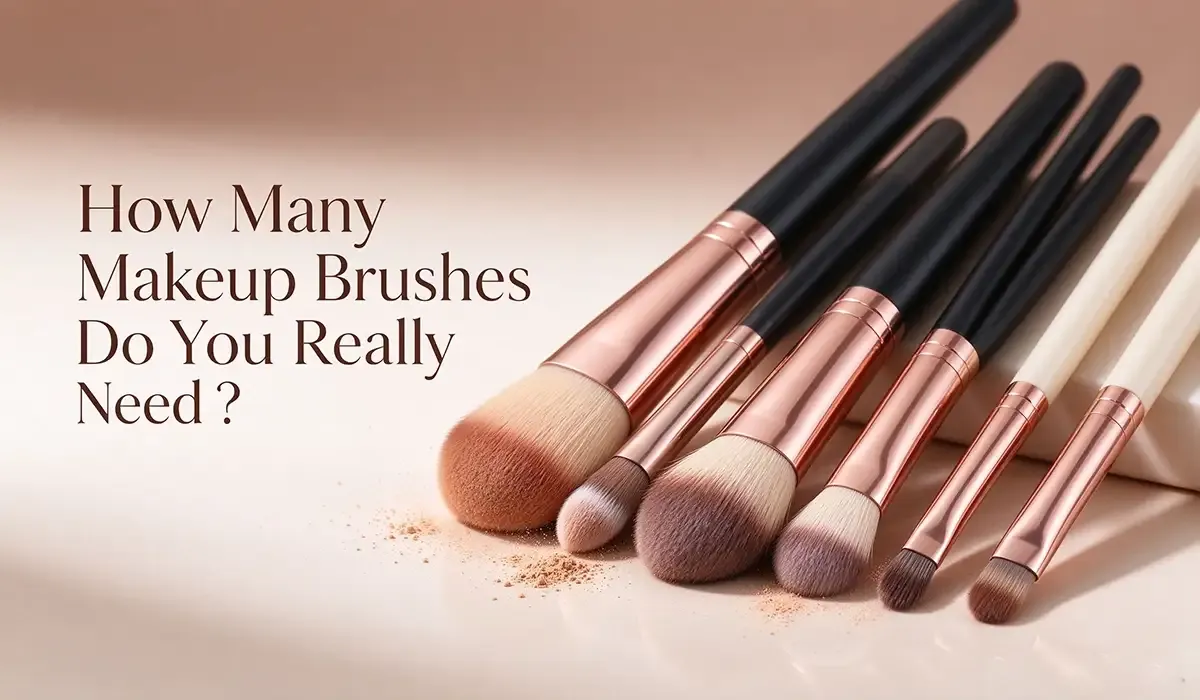
There is one major pitfall for beginners buying makeup brushes: purchasing too many different types. You might buy one today, add another tomorrow, and before you know it, your drawer is overflowing with brushes—yet you only ever reach for the same two or three. Beauty brands often promote "deluxe 12-piece sets" or "professional 24-piece collections," subtly implying that your makeup look won't be complete without every single one. In reality, you’ll likely never use 80% of the brushes in a 30-piece set.
Therefore, this article won’t attempt to provide a "definitive answer" on exactly how many brushes you need. Instead, it focuses on the ones that actually fit into your daily life—the go-to brushes you find yourself washing, reusing, and instinctively grabbing whenever you’re getting ready.
1. 3-Piece Makeup Brush Set
A 3-piece set is ideal for beginners, those on a very tight budget, or anyone who simply wants to see if they will actually stick to using brushes.
The standard configuration for a 3-piece set includes: a foundation brush, a blush brush, and an eyeshadow brush.
The foundation brush ensures even application and efficiency; the blush brush adds a healthy glow; and the eyeshadow brush gives your eye makeup a visible presence. For lips, you can use your fingers or the applicator wand that comes with your lip product; for eyebrows, you can use the spoolie attached to your brow pencil. At this stage, you can skip contouring and highlighting. The purpose of these three brushes is to help you complete a "minimum viable" makeup routine, rather than leaving you feeling stuck or wondering what else you might be "missing."
2. 5-Piece Makeup Brush Set
A 5-piece set is perfect for daily commuters or anyone who prefers not to deal with the "maintenance" of a large collection of tools. It is designed around the concept of "multi-purpose" brushes.
An effective 5-piece set typically consists of: an all-purpose base brush, a multi-functional face brush, an eyeshadow base/packing brush, an eyeshadow blending brush, and an angled brow/liner brush.
The "multi-functional face brush" is the heart of this set—a large, fluffy brush that can handle setting powder, blush, contour, and highlight. It is perfectly acceptable to use the same brush for both blush and contour, while an angled brow/liner brush can cover both precise tasks: filling in eyebrows and applying eyeliner. In a 5-piece set, brushes aren't assigned to a single, exclusive function; instead, each one serves two or three different purposes.
3. 8-Piece Makeup Brush Set
An 8-piece set is suited for those who wear makeup daily, have established routines for eye makeup and contouring, and are willing to invest a little extra effort into managing their tools for the sake of greater convenience.
A typical 8-piece set includes brushes for foundation, loose powder, blush, and contour/nose shading, plus four brushes for the eyes: a base/packing brush, a blending brush, a detail brush, and an angled/liner brush. Another common 8-piece brush set configuration focuses on brushes for eyebrows, nose contouring, medium/small eyeshadow application, angled (liner/brow) work, highlighting the *aegyo-sal* (under-eye area), blush, and lips.
The difference between these configurations highlights one key point: an 8-piece set is not a definitive standard.
4. 12-Piece Brush Sets
Professional makeup artists can complete 90% of everyday looks using just 7–9 essential brushes; once you exceed 12, the likelihood of brushes sitting unused skyrockets. There are only two scenarios where you truly need more than 12 brushes: first, if you are a professional makeup artist working with various face shapes and product textures; or second, if you have a specific, intentional purpose for those "extra" brushes—rather than just keeping them "on hand" for the sake of it.
5. Three Key Purchasing Tips
5.1 Buy individual brushes, not pre-packaged sets
The main issue with brush sets isn't necessarily quality; it’s that "there will always be brushes in a set you never use, or ones that just don't feel right for your technique." Buying individual brushes to fill specific gaps ensures a much higher usage rate than purchasing a full, pre-bundled set.
5.2 Focus on quality
For wet-application products (foundation, concealer, cream-based formulas), choose synthetic bristles—they are durable, easy to clean, and don't absorb excessive product. For dry powders (setting powder, eyeshadow, contour), opt for natural animal hair if your budget allows; it generally offers superior powder pickup and blending capabilities. For beginners, a full set of synthetic brushes is a perfectly valid choice—not a compromise.
5.3 Let your "cleaning frequency" dictate how many brushes you need
If you aren't going to wash your foundation brush every single day, you’ll need two to rotate between; if you *can* commit to daily cleaning, one is sufficient. The number of brushes you own should be determined by your cleaning habits and patience, not by the number of pieces included in a retail set.
The number of brushes you truly need isn't defined by "what others say"—it’s defined by how many brushes you are willing to wash immediately once they’ve all become dirty. Anything beyond that number is unnecessary.