Buying Guides
How To Launch A Private Label Makeup Brush Line As A Beauty Influencer
This article provides a detailed analysis for beauty influencers on how to launch a private-label makeup brush line.
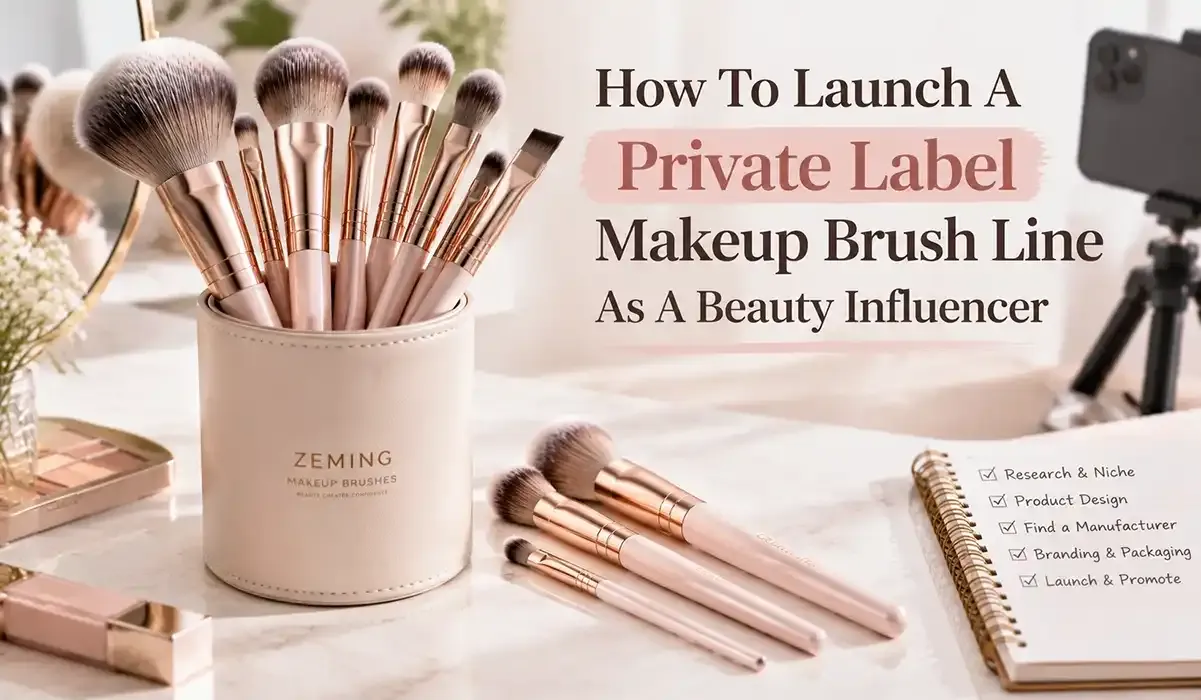
When beauty influencers launch their own brands, they most commonly gravitate toward cosmetics or skincare. Makeup brushes, however, represent an underrated starting point: they are moderately priced, used frequently, and their quality is immediately apparent—a user can tell whether a brush is good the very first time they use it. The global makeup brush market, valued at approximately $1.58 billion in 2026, is projected to grow at a compound annual growth rate (CAGR) of 5.92%, reaching $2.24 billion by 2032. Within the broader market for makeup brushes and tools—which is set to reach $7.4 billion by 2025—brushes account for $4.6 billion, with a growth rate of 6.5%. While the category is expanding and consumers are making purchases, influencer-led brands in this space rarely fail due to a lack of initial sales; rather, they often falter because customers do not return for repeat purchases.
The trajectory of BK Beauty offers a useful point of reference. Lisa Jauregui spent five years building an audience on YouTube before launching her brand. For the first few years, she focused exclusively on brushes—resisting the urge to expand into other product categories—and relied entirely on self-funding. Eventually, the business scaled to the point of processing 22,000 orders in a single day, all fulfilled through her own warehouse. Mikayla Nogueira, by contrast, took a "lighter" approach: she used feedback from TikTok to directly inform the design of her brushes, selling them to her audience through a small-batch, direct-to-consumer (DTC) model. What both paths share is not merely the possession of a large following, but the ability to translate audience insights into tangible, high-quality brush products that encourage repeat purchases.
1.Why makeup brushes are a great fit for beauty influencers' own brands
1.1 The product category possesses structural characteristics that are inherently "influencer-friendly."
Compared to cosmetics and skincare, makeup brushes offer three attributes that are particularly advantageous for influencer-led brands.
First, the threshold for evaluation is low, and the feedback loop is short. While the efficacy of skincare products can be ambiguous, and the performance of makeup (such as longevity) is often influenced by skin type or environmental factors, the core experience of a makeup brush—whether the bristles feel scratchy, how well they pick up product, how evenly they blend, and how securely the ferrule is attached—can be assessed by a user upon the very first use. This means that the quality of a product is revealed almost immediately, quickly leading to either positive word-of-mouth or negative reviews. For influencers who are genuinely committed to product development, this acts as an amplifier; for those who merely slap their labels on generic, pre-made products, it serves as an accelerator for their downfall.
Second, the logic behind repeat purchases is driven by "expansion" rather than "replenishment." Makeup brushes have a long replacement cycle—38% of consumers replace theirs only every two years or even longer. Consequently, repeat purchases are not primarily triggered by the need to replace a worn-out item; rather, they occur when a user, satisfied with a particular brush, decides to purchase additional brushes from the same brand for other steps in their makeup routine. BK Beauty, for instance, began with a single concealer brush—building trust through a memorable, high-quality tool—before gradually expanding into full sets and a wider variety of brush types. This strategy perfectly leverages that logic.
Third, there is a high degree of overlap between content creation and the actual product experience. Topics frequently covered by influencers—such as application techniques, brush comparisons, and blending results—are, in essence, the very language of product development. When Sonia G., a renowned brush collector and influencer, launched her own brand, the core of her product narrative centered on "the pleasure and comfort of the application process—from the shape of the brush and the feel of the handle to the texture of the bristles and the final makeup result." This narrative requires no translation; it is the very content that influencers produce on a daily basis.
1.2 However, being "well-suited" does not mean it is "easy": The true barriers to entry for a makeup brush brand lie outside the category itself.
These advantages come with one fundamental prerequisite: the product must be able to withstand the test of tactile evaluation. The low barrier to entry in the makeup brush category is somewhat deceptive. While the startup cost—sourcing generic, off-the-shelf brush designs from industrial hubs and simply adding a logo—is indeed low, the reality is more complex. In Qingxian County, Cangzhou, there is a dense cluster of 253 brush manufacturers and over 1,000 supporting processing plants, with an annual output of 500 million makeup brushes; in fact, more than 60% of the world’s high-end makeup brushes are produced there. This supply chain density means that while creating "the first brush" is easy, the real challenge lies in creating a brush that compels a user to come back and buy a second one.
2.Validate audience demand before investing in inventory
2.1 The Object of Validation Is Not "Do They Want It?" But "Will They Pay for It?"
Comments like "When is it coming out?" or "I’m definitely buying it!"—frequently seen in the comment sections of beauty influencers—are signals of intent, not evidence of actual demand. Such signals are "cheap" because the cost of expressing them is virtually zero, whereas inventory decisions tie up real capital. The goal of validation is to bridge the gap between "intent" and "willingness to pay" until the distinction becomes clear enough to make an informed decision.
A practical, tiered approach involves moving from low-commitment to high-commitment stages:
Level 1: Waitlist. Use a landing page or a "join the waitlist" feature on social media to collect email addresses or phone numbers. The value of a waitlist lies not in the raw number of sign-ups, but in the fact that these individuals are willing to provide their contact information even in the absence of product images, pricing, or reviews.
Level 2: Paid Pre-orders or Limited-Quantity Pre-sales. During the prototyping phase, open pre-orders for one or two specific items, with a clearly defined shipping window. The pre-order price doesn't need to be high, but the transaction must involve an actual payment.
Level 3: Small-Batch Initial Launch as a "Paid Test." Even if pre-orders perform well, the initial production run should be kept within a manageable, low-risk scale. While the unit cost for a small batch is higher, it provides critical data: actual return rates (issues like shedding, bristles feeling scratchy, or ferrule defects will surface quickly among the first users), insights into repurchase intent (which specific items do customers ask to be restocked?), and authentic feedback that can be leveraged for content creation. The objective of this first batch is not to maximize profit, but to gather enough data—at a controlled cost—to inform procurement decisions for the next round.
2.2 The Timing of Validation Determines Its Effectiveness
Test pain points through content first, gauge intent via a waitlist, assess willingness to pay through pre-orders, and only then use the validated data to negotiate production volumes and lead times with the factory. Before launching her brand, BK Beauty spent five years building an audience and establishing trust through content; similarly, Mikayla used small-batch releases to integrate feedback from TikTok directly into the design process—rather than finalizing the product before promoting it. Both examples share the same underlying logic: demand signals must precede inventory commitments.
2.3 A Warning Sign to Heed
If your waitlist grows slowly, or if your pre-sale conversion rate falls significantly short of expectations, do not simply attribute it to the idea that "my followers might not have seen it yet." A more honest interpretation is that the specific "pain point" you’ve chosen to address—related to makeup application—may not be painful enough; alternatively, your audience’s willingness to pay within this product category may not be as high as their engagement with your content suggests. The true value of this validation phase lies in the opportunity it provides to pivot or adjust your strategy before you incur the costs of holding inventory.
3.Translate content expertise into clear product concepts
3.1 The true essence of "content expertise" lies in knowing exactly at which step users repeatedly get stuck.
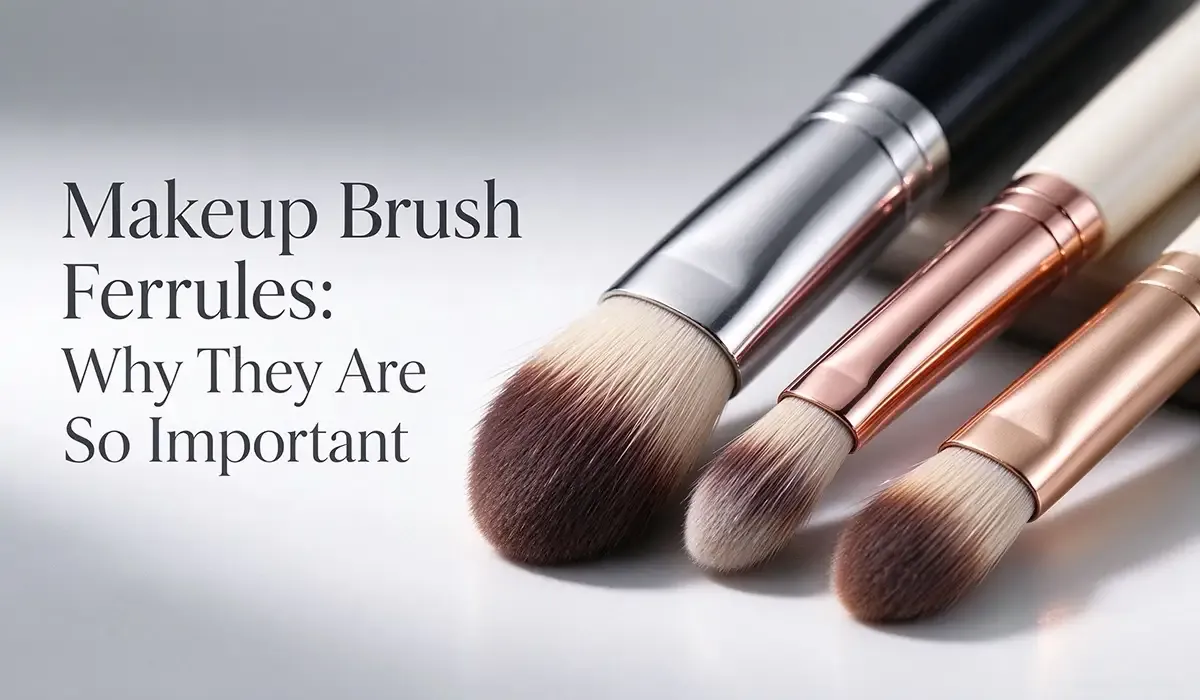
For beauty influencers, a keen understanding of makeup finishes, brush shapes, and application techniques is a genuine advantage. However, product concepts cannot remain at the level of "this brush looks nice" or "this makeup effect is trending." Factories require actionable specifications: brush head shape, dimensions, density, elasticity, fiber type, ferrule construction, and handle weight. The quality of the translation between these two "languages"—the influencer’s perspective and the manufacturer’s technical requirements—determines whether a brush is merely a "content-driven" item or a well-engineered "product."
The starting point for conversion is a specific, well-defined pain point. The A506 concealer brush from BK Beauty became a memorable hallmark for the brand not because it was "pretty," but because it was dubbed the "kitten paw." This name directly addressed the specific technique of patting concealer into the skin—positioning it as a tool for a precise action rather than just "another concealer brush."
3.2 Validate concepts through "behavioral evidence" rather than "aesthetic preference."
Once a pain point has been identified, the concept must be validated during the prototyping phase through comparative testing. A practical approach is to produce 2–3 versions with varying specifications (e.g., different bristle densities, head curvatures, or fiber grades) and demonstrate them in content. Observe the audience’s reaction to the *differences in the resulting makeup look*—rather than simply asking, "Which one looks better?"
3.3 Assessing the "manufacturability" of a concept.
No matter how compelling a product concept may be, it does not constitute a viable product definition if it cannot be consistently manufactured by a factory. Before moving to procurement, a concept must address three key questions regarding manufacturability:
(1) Can the brush shape be produced using existing molds, or will it require new tooling at a reasonable cost? Highly unconventional brush head shapes may lead to higher mold-development costs and lower production yields.
(2) Do the desired tactile qualities of the bristles correspond to commercially available fiber grades? A goal like "as soft as animal hair, yet 100% vegan" is a valid design direction, but it requires specific fiber types and precise blending ratios—not just a marketing claim.
(3) Does the problem the brush solves align with its intended price point? For a makeup brush designed to solve the problem of "asymmetrical nose contouring," the premium a user is willing to pay depends on its perceived uniqueness. If the underlying concept could just as easily be fulfilled by any generic, off-the-shelf brush, the potential for a price premium shrinks rapidly.
The ultimate goal of the conceptualization phase is a product brief—not a mood board—that a factory can use to provide price quotes and create prototypes. This brief must, at a minimum, specify: the intended makeup effect and usage scenarios; the shape and dimensions of the brush head; the type and performance requirements of the bristles; the materials and construction of the handle and ferrule; the placement and production method for the logo; the target market and relevant compliance requirements; and an estimated range for the initial order volume. This document serves as the "constitution" for all subsequent procurement.
4.How to Source the Right Makeup Brushes to Expand Your Brand
4.1 The starting point of procurement is not "finding a factory," but "writing specifications."
A request brief doesn't need to be precise down to the millimeter from the outset, but it must provide enough detail for a factory to determine: "Can we produce this? What is the approximate cost? What is the minimum order quantity (MOQ) range?" The more specific the brief, the more valuable the factory’s quotes and prototyping feedback will be for your decision-making. Conversely, a vague brief often elicits a generic "we can do it" response—which, in the context of procurement, frequently translates to "we’ll figure it out as we go."
4.2 The Truth About MOQs: It’s Not Just a Single Number, but a Set of Constraints
MOQs for custom brush manufacturing vary significantly depending on the factory and the level of customization. In this industry, you can find small-batch options—such as orders starting at 100 sets with a 7-day turnaround—as well as tiered policies (e.g., 3,000 units for brushes with aluminum ferrules, or 1,000 for those with brass ferrules). For simply adding a logo to existing stock, the MOQ might be as low as 50 sets, whereas deep customization for a new design could require an order of 3,000 to 5,000 units.
What truly matters for procurement decisions is the granularity of the MOQ. Components like bristles, ferrules, handles, surface finishes, logo printing, and packaging may each have their own independent minimums; the effective MOQ for the entire project is dictated by the component or process with the highest threshold. If a factory provides only a vague, catch-all MOQ without clarifying which specific components or production stages carry their own separate minimums, that quote is of little value for decision-making. For a brand—especially one run by an influencer or content creator—a more pragmatic approach to an initial order is to find a supplier willing to handle small batches while still adhering to a formal "sealed sample" (gold standard) protocol. Avoid the trap of chasing "better pricing for larger volumes" by gambling on a quantity that hasn't yet been market-tested.
4.3 Supplier Vetting: Four Indicators That Predict Collaboration Quality Better Than a Price Quote
First: Responsiveness to prototyping requests and policies regarding sample revisions. A factory that is willing to apply engineering judgment during the prototyping phase—for instance, by pointing out that "a brush style with this specific density will lack sufficient elasticity"—is a much better candidate for the next round of selection than a factory that claims it "can do anything" and insists that "everything is fine." You should also clarify key terms: are there prototyping fees? Is there a limit on the number of revision rounds? Can the prototyping costs be credited toward bulk production orders?
Second, consider the verifiability of production capacity claims. A common issue in procurement is small-scale factories overstating their capacity, leading to delays once orders are placed. It is far more reliable to request documentation on their recent production load and to include contractual clauses regarding penalties for late delivery, rather than relying on verbal assurances.
Third, evaluate their ability to provide evidence for "vegan" or "cruelty-free" claims. If your brand intends to position itself as vegan or cruelty-free, you must verify the entire evidentiary chain during the procurement process—including the origin of the fibers, supplier declarations, and any necessary certification documents. For a brand like BK Beauty, which centers its identity on being 100% vegan and cruelty-free, this commitment relies on the supply chain’s ability to provide traceable supporting documentation—not just a label printed on the packaging.
To learn more about makeup brushes, please contact the professional makeup brush supplier, Zeming.